
Slow growth in key sectors would also have implications on the Index of Industrial Production number
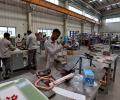
In a relatively rare occurrence, the growth in manufacturing jobs exceeded the pace of sector growth in 2022-23 (FY23). The number of persons engaged in the segment grew by 7.43 per cent in FY23, according to figures from the Annual Survey of Industries (ASI) released on September 30. The gross value added for the manufacturing sector grew by 4.24 per cent in current prices and declined by 2.2 per cent in real terms for FY23, according to earlier annual figures released by the government.

Recent industrial production numbers confirm that industrial growth is on track.

The banking regulator was uncomfortable with the runaway pace at which consumer credit was growing.

Irdai had introduced two Covid specific products in the market - Corona Kavach and Corona Rakshak - that saw huge acceptance among the consumers as these products had lower premiums.

Slow growth in key sectors would also have implications on the Index of Industrial Production (IIP) number as these segments account for about 41 per cent to the total factory output.

India's Index of Industrial Production -- which measures industrial growth -- plunged to a dismal 1.6 per cent in December 2010 from 18 per cent in the same period a year ago due to the poor performance of the manufacturing sector.
A majority of CEOs from top Indian companies including ICICI Bank, Bajaj Auto, TVS Motor GE India, and HUL, do not foresee any production slowdown in this fiscal, even as rising input and interest costs are affecting the net profit margins, a CII survey has found.

Certain changes in the past two or three years could have a long-term structural impact on the IT services market.

While slowdown was prominent in vehicle loan segment, home loans growth improved to 18.7% in May 2019 from 15.5% a year ago.

What came to the rescue of the IIP numbers in February were mining and electricity.

India's economy is showing signs of slowdown, with hi-frequency indicators like industrial output posting subdued growth and automobile sales touching historical lows.

The output of eight core infrastructure sectors contracted for the third month in a row by 1.3 per cent in December 2020, dragged down by poor show by crude oil, natural gas, refinery products, fertiliser, steel and cement sectors. The core sectors had expanded by 3.1 per cent in December 2019, according to the provisional data released by the Commerce and Industry Ministry on Friday. Barring coal and electricity, all sectors recorded negative growth in December 2020. During April-December 2020-21, the sectors' output declined by 10.1 per cent against a growth rate of 0.6 per cent in the same period of the previous year.

Indian factory growth likely slowed in Jan, inflation to stay muted.

Among the main industry segments, manufacturing activity declined to 5.9 per cent from 10.6 per cent a year ago.

Amid better semiconductor chip supplies, the Indian automotive industry posted an 8 percent growth in production of vehicles across categories for the month of May, with three-wheelers (20 per cent) and passenger vehicles (16 per cent) leading the pack. Exports, however, dipped 21 per cent at an industry level. The industry also recorded its highest-ever May wholesales of domestic passenger vehicles (334,802 units), riding on high demand for sport utility vehicles (SUVs) and better supplies of semiconductor chips.

As temperatures shoot up this month signalling an early onset of summer, sales of air conditioners (AC) are set to increase, with companies expected to hike the prices of ACs by 4-5 per cent due to component shortages. Leading players like Haier and Bluestar and suppliers like EPack Durables have raised their production capacities to meet the 25-30 per cent rise in demand expected in the coming months.

'Make-in-India played a key role in India's effective action against terrorism during Operation Sindoor.'

Global rating agency Moody's on Monday raised India's growth forecast for 2024 calendar year to 6.8 per cent, from 6.1 per cent estimated earlier, on the back of 'stronger-than-expected' economic data of 2023 and fading global economic headwinds. India's real GDP expanded 8.4 per cent year-over-year in the fourth quarter of calendar year 2023, resulting in a 7.7 per cent growth for full-year 2023. Capital spending by the government and strong manufacturing activity have meaningfully contributed to the robust growth outcomes in 2023, Moody's Investors Service said.

The time is ideal for a 'Dream Budget' akin to the 1991 reforms that sparked high growth and unlocked significant gains in productivity, points out Rajeswari Sengupta.

'India represents one of the top opportunities with robust growth, solid fundamentals, and openness to foreign investment.'

Demand for fast-moving consumer goods (FMCG) fell in April owing to lower stocking by kiranas, according to the data from Bizom. Kiranas stocked lower quantities in April as they resorted to heavy stocking in March. Sales in value terms were down 8.4 per cent in the month as against the same period last year while on a month-on-month basis, they declined 17 per cent.

The profitability of industry is under stress and needs to be addressed by encouraging investments in the supply side infrastructure.
Fitch Ratings on Monday said India's steady GDP growth outlook, improved banking sector's financial health and expected interest-rate cuts in 2025 will support credit access for corporates in FY26.

Rating agencies Crisil and Icra on Monday revised down their India growth projections for the current fiscal and the second quarter mainly due to the ripple effect of slowdown in global growth and mixed crop output. Crisil downgraded the India growth forecast by 30 bps to 7 per cent while Icra pegged the economic expansion at 6.5 per cent for the second quarter of FY2022-23. "We have revised down our forecast for real gross domestic product growth to 7 per cent for fiscal 2023 from 7.3 per cent, primarily because of the slowdown in global growth that has started to impact our exports and industrial activity.
The Rs 85,000 crore (Rs 850 billion) domestic cement industry is fast realising the painful situation it is getting into, as the GDP growth rate is on a slippery path and over 70 million tonnes of fresh capacities are in the pipeline in the next two years.

Shares of auto component major, Samvardhana Motherson International, has gained 11.5 per cent on the bourses after the company approved the qualified institutions placement (QIP) issue and announced the calculation methodology for its compulsorily convertible debentures, or CCDs, into equity shares. Analysts cite strong investor response to the issue that has kept the sentiment positive for the stock. Brokerages, however, have a mixed view on the outlook for the auto parts supplier.

Slow growth in the key sectors would have implications on the IIP number as these segments account for about 41 per cent of the total factory output.

Maruti Suzuki and Hyundai Motor India on Monday reported a dip in passenger vehicle dispatches to dealers in the domestic market last month as the companies tried to adjust vehicle inventory amid slowing demand. Maruti Suzuki India said it "calibrated supplies" to the dealers, aligning with the industry's retail sales projections amid India-Pakistan conflict and a dip in sales of entry-level cars.

While this will incur a revenue loss amounting to 0.2 per cent of GDP, it will provide a strong boost to consumer sentiment and spending, points out Rajani Sinha.

'In terms of semiconductors, challenges do remain in the pan industry, but I think we are much better than where we were a year or so back.'

If growth reverts to the pre-Covid level, a lot of people may have to temper their rosy optimism, points out Debashis Basu.

It is pegged at 6.8-8% by various economists, as compared to 6.7%.

Skoda Auto India, the Czech carmaker that has recently found success with its compact SUV Kylaq, says it remains committed to developing a fully localised electric vehicle (EV). The EV will be manufactured at its Chakan facility for both Indian market and exports.

'As more and more work becomes automated and a range of lower-level and higher-level tasks are replaced by AI, the need for a classic command-and-control pyramid structure goes away.'

From the 30-share blue-chip pack, Zomato cracked nearly 7 per cent. Power Grid, Adani Ports, Tata Steel, NTPC, Tata Motors, Tech Mahindra, Mahindra & Mahindra, Asian Paints, Sun Pharma and UltraTech Cement were the other major laggards. In contrast, Axis Bank, Hindustan Unilever, Tata Consultancy Services and IndusInd Bank were the gainers.

After lagging behind the broader market over the past three and six months, defence sector stocks have regained ground, reversing their performance from the past month. Concerns about slowing order inflows, execution hurdles, supply chain disruptions, and high valuations had weighed on the sector.

India's annual infrastructure output growth slowed to a three-month low of 2.4 percent in Decembe

They shied away due to concerns over asset quality and a rise in NPAs.

Natural gas output rose by 6.4 per cent in June.
